Building QA Teams Through Staff Augmentation: Testing & CI/CD
Feb 24, 2026
9 min read
Building QA Teams Through Staff Augmentation: Testers, Automation, and CI/CD
Quality assurance is often the first team to feel growing pains. You ship an MVP with minimal testing, then add features faster than QA can test them. Bugs slip through. Customer complaints increase. You need more testers — but hiring takes months, and you're not sure if you need 2 testers or 10. This is where staff augmentation shines.
At Propelius Technologies, we've provided QA augmentation for 50+ companies, from startups to enterprises. This guide covers how to scale QA through staff augmentation, what roles to add, and how to integrate augmented QA teams effectively.
Photo by Sternsteiger Stahlwaren on Pexels
Why QA Is Perfect for Staff Augmentation
Common QA Challenges
Variable workload: Testing spikes before releases, drops after
Skill gaps: Need automation engineers but can't afford full-time
Hiring delays: Finding good QA engineers takes 3-6 months
Uncertainty: Don't know if you need 2 testers or 5 until you try
Cost pressure: QA budgets are always squeezed
Staff Augmentation Benefits
Fast ramp-up: 1-2 weeks to add testers vs. 3-6 months to hire
Flexible scaling: Add 3 testers before release, drop to 1 after
Specialized skills: Get automation/performance/security experts without full-time commitment
Lower cost: 40-60% cheaper than Bay Area hires
Try before committing: Test team dynamics before full-time offers
QA Roles You Can Augment
1. Manual QA Testers
When to add: Pre-release crunch, exploratory testing, new feature validation
What they do:
Execute test cases manually
Exploratory testing (find edge cases)
User acceptance testing (UAT)
Regression testing
Bug reporting and tracking
Cost: $15-35/hour depending on location and experience
Best for: Early-stage products, mobile apps, UI-heavy applications
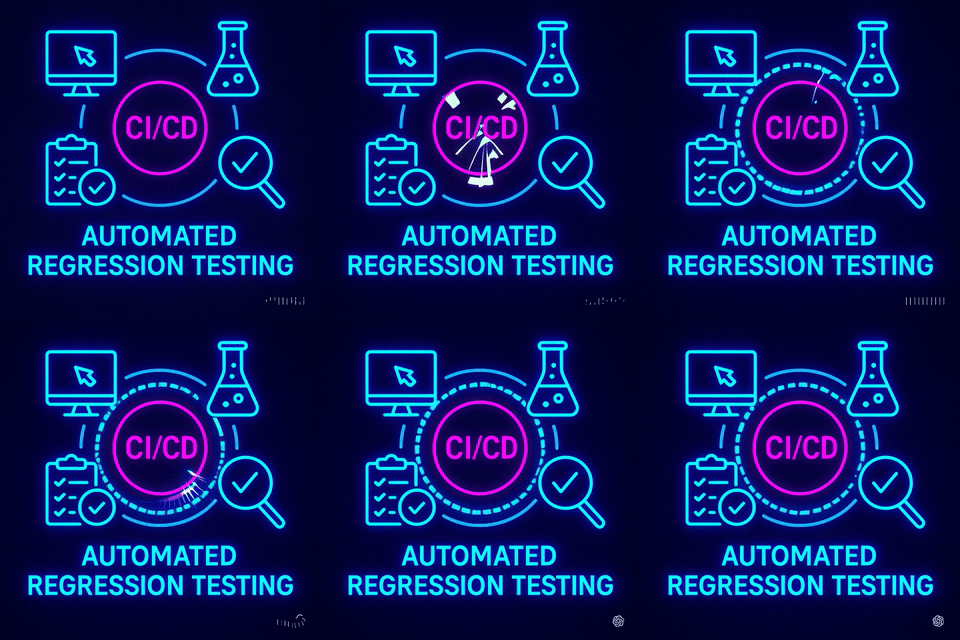
2. Test Automation Engineers
When to add: Manual testing bottlenecks, need CI/CD integration, scaling releases
What they do:
Build automated test frameworks (Selenium, Cypress, Playwright)
Write unit, integration, and E2E tests
CI/CD pipeline integration
Test infrastructure maintenance
Performance test automation (k6, JMeter)
Cost: $30-60/hour
Best for: SaaS products, web apps with frequent releases
3. QA Lead / Test Manager
When to add: QA team >3 people, need strategy and coordination
What they do:
Define testing strategy and standards
Manage QA team and workload distribution
Coordinate with product and engineering
Test planning and estimation
Metrics and reporting (defect rates, test coverage)
Cost: $40-80/hour
Best for: Companies scaling QA from 1-2 to 5-10 people
How do I handle timezone differences with offshore QA teams?
Build 2-4 hour overlap. For US-India, schedule QA team for afternoon India time (morning US time). Use async communication — daily bug reports, recorded demos, clear documentation. For urgent issues, have one QA person on-call during US hours.
Will augmented QA engineers miss critical bugs?
Quality depends on onboarding and process, not employment type. Provide clear test cases, product knowledge, and direct access to developers. Augmented teams often outperform understaffed in-house teams because they're dedicated to testing (not context-switching).
What about IP protection and code access?
Use NDAs (standard practice). Limit QA access to staging environments, not production or source code (unless automation engineers need it). Many augmentation providers are SOC 2 compliant. For highly sensitive products, consider Eastern Europe over Asia for legal recourse.
Who owns the test automation code — us or the vendor?
You do. Staff augmentation means engineers work for you — all code, test cases, and infrastructure belong to you. Document this in your contract. This differs from outsourcing, where the vendor owns deliverables.
Can I hire augmented team members full-time later?
Usually yes, but check your contract. Some providers charge a conversion fee (typically 15-25% of annual salary). Others allow free conversion after a minimum period (6-12 months). This "try before you buy" approach de-risks hiring.
Conclusion
QA doesn't have to be a bottleneck. Staff augmentation lets you scale testing capacity flexibly, access specialized skills, and control costs — all while maintaining quality.
Start lean: Add 1-2 manual testers to relieve bottlenecks.
Invest in automation: Once manual tests stabilize, bring in automation engineers.
Build for scale: Add QA leadership when team reaches 5+ people.
At Propelius Technologies, we provide dedicated QA teams for companies at every stage. Get in touch to discuss scaling your QA capabilities.
Need an expert team to provide digital solutions for your business?